
In the open, $200–$500
A visible, reachable burst, garden, garage, accessible wall, cut out and repaired at business-hours rates.
First we stop the water. Then we find the actual split, not just where the water shows up, which is rarely the same place, and repair it properly. On call around the clock across Baulkham Hills and the Hills District.
Pipes rarely burst without a biography. Baulkham Hills’s older homes run copper laid generations ago, thinning quietly from the inside until mains pressure finds a weak micron; galvanised steel rusting at every thread; and renovation-era junctions where old metal meets nineties plastic meets modern PEX, each connection a wager against time. High street pressure across parts of the Hills District settles those wagers early.
Then the water lies to you about the address. It runs the outside of the pipe, follows timber, and surfaces metres downhill of the failure: which is why opening the ceiling under the stain finds wet plaster and nothing to fix. We refuse to guess: the line is traced with listening gear, thermal imaging and section pressure testing, the failed piece is cut out, and the repair proves itself on a gauge before the plaster goes back on.


If your pipework has failed more than once, note what the weather had been doing. Movement-driven failures come after the ground has changed volume, not after a particularly cold night: Sydney does not freeze pipes.
Homes from the 70s to 90s often still run original clay pipework that cracks and shifts as the suburb’s reactive soil dries and swells.
Knowing that changes the repair. A joint that has been pulled apart by movement will be pulled again, so the fix is flexibility at that point rather than a rigid replacement of the same design.
Newer townhouse developments share drainage runs, so a single blockage needs a camera and the right access to clear the whole line properly.
The line is broadly the same as for drains: pipework serving only your lot is yours, and anything serving the building, risers, mains, common-property pipework, belongs to the owners corporation.
Where it gets argued is damage. A common-property pipe that damages your contents usually engages two policies, and the way to keep that simple is contemporaneous evidence. We document time, source and cause on the night for exactly that reason.
Baulkham Hills’ mature street trees and established gardens send roots probing into old pipe joints, a leading cause of recurring blockages here.
Sloping properties are full of retaining structures, and services frequently run behind or beneath them because that was the only route available. A leak in that position is both harder to reach and more consequential, saturated backfill is what makes retaining walls fail.
If water is showing at the base of a wall, treat it as urgent even if the volume looks trivial. The plumbing repair is minor next to what the wall costs.
The Hills’ heavy clay swells in the wet and shrinks in the dry, cracking joints and pulling pipes out of line so waste snags and backs up.
Not every escape of water is a burst pressure pipe. A cracked or collapsed drain leaks too, slowly, without a pressure drop, and often for months before anything shows.
The distinction matters because the repairs are different jobs at different prices. A pressure leak shows on the meter with every tap closed; a drain fault does not, and it is found with a camera rather than a listening device.
On a slab home in reactive ground, differential movement between the slab and the surrounding soil is a real force acting on anything crossing that boundary. Pipes entering the slab edge take the strain.
A leak under a slab is the expensive version of this problem, and it is worth finding precisely before anyone cuts concrete. Acoustic and thermal location gets it to within a small area, which is the difference between a patch and a floor.
They can look identical from inside the house: water where it should not be, and a fixture behaving badly. The quick test is whether the water is clean and continuous, or dirty and rising when something is used.
Clean water appearing with no fixture running is a pressure pipe. Dirty water rising when you flush or drain something is the sewer. Tell us which on the phone, it decides what comes off the van and whether you should be isolating the water at all.
A visible, reachable burst, garden, garage, accessible wall, cut out and repaired at business-hours rates.
Adds the tracing and the careful access: finding the true split before opening anything, so only one hole gets made.
Detection gear, concrete access or a reroute. Precision here is the whole cost battle, small hole, right place.
Roughly $180–$250/hr against $120–$160 daytime, plus call-out. With the meter off, morning is sometimes the smarter spend, we will tell you honestly.
Leak detection's first hour, locating the failure before demolition, reliably cheaper than exploratory holes.
Every repair leaves pressure-tested and carries a lifetime workmanship warranty. Figures here are indicative of the 2026 Sydney market rather than a quote from us, you get your own number as a fixed price before any work starts.
Meter valve, clockwise, done: flood over before we leave the depot. On site we isolate just the wounded line where the plumbing allows.
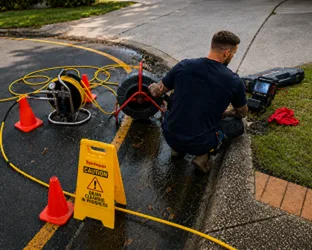
Acoustic, thermal and pressure evidence: because the failure is almost never beneath the stain, and guessing costs plaster.

The bad section comes out; new pipe goes in. If the exposed run says "replace me entirely", you get that verdict with prices for both paths.

Full mains pressure against the repair while everything is still open. It passes, then the surfaces go back, in that order only.
The crisis ended when the meter closed. Call now and the repair gets planned properly, not frantically.
Traced with instruments, repaired once, proven under pressure: and priced before any of it starts.

Leave your details and our local Baulkham Hills team will call you back fast.